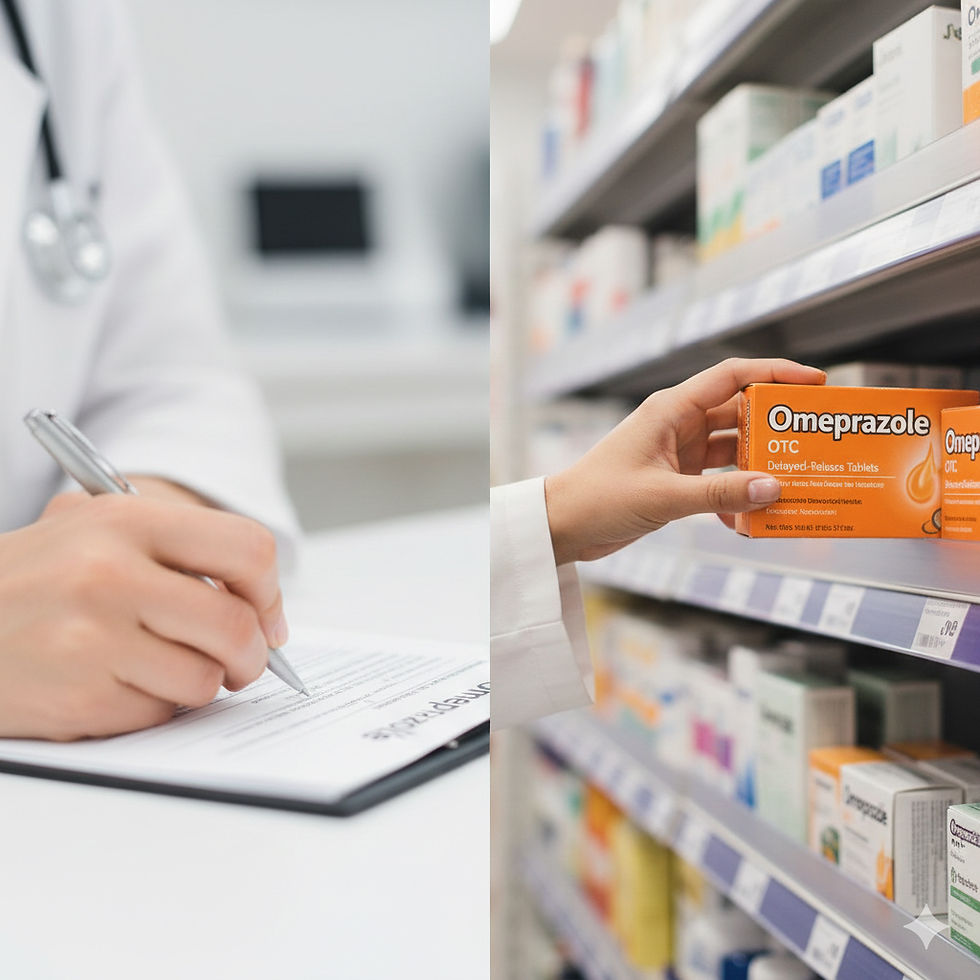
Price Transparency: OTC Vs Rx
- Rph Sam
- Nov 22, 2025
- 2 min read
Updated: Jan 16

Why Over-the-Counter Options Matter
When you pick up a prescription, the cost you pay isn’t always just about the medication itself. It often involves the insurance policy behind it—copays, deductibles, prior authorizations, and formulary tiers. These layers can make pharmacy bills confusing and unpredictable.
What many people don’t realize is that, in some cases, an over-the-counter (OTC) option provides the same symptom relief at a lower price—with full price transparency right on the shelf.
How Insurance Affects Prescription Costs
Most insurance plans divide medications into tiers. This means that different medications have different costs associated with them. Alongside this, many plans include additional fees that can add up quickly. This complexity often leaves people with surprise costs—especially for simple, common conditions.
OTC Price Transparency: Side-by-Side Comparisons
OTC medications don’t involve copays, deductibles, or paperwork. The price on the shelf is the price you pay. Here are real-world comparisons showing how OTC alternatives often cost less than insurance copays for the same active ingredient:
Condition | Common Rx Option | Avg Insurance Copay* | OTC Alternative | Avg OTC Price |
Seasonal allergies | Rx loratadine (Claritin) | $20 copay | Loratadine 10 mg (30 tablets) | $8–$12 |
Frequent heartburn | Rx omeprazole 20 mg | $25–$40 copay | Prilosec OTC 20 mg (14 tablets) | $10–$15 |
Mild pain/fever | Rx ibuprofen 600 mg | $10–$20 copay | Ibuprofen 200 mg (100 tablets) | $6–$10 |
Acid indigestion | Rx famotidine 20 mg | $15–$30 copay | Pepcid AC 20 mg (30 tablets) | $8–$12 |
Copays vary widely, but these ranges reflect common insurance tiers. In many cases, the OTC version of the same medication costs less than the insurance copay
Why This Matters
Choosing OTC options for minor, short-term conditions can offer major benefits:
Cost-Effective: OTC products are often the most affordable and accessible route for everyday symptoms like allergies, heartburn, indigestion, and mild pain.
When Insurance Is Still Essential
OTC medications are great for minor conditions, but not everything can or should be self-managed. You still need prescriptions—and insurance coverage—for conditions such as:
Chronic illnesses
Severe infections
Complex health issues
OTCs are a powerful tool for self-care, but they cannot replace important prescription therapies.
Pharmacist Tips for Saving Money
Consult Your Pharmacist: They can help you find the best OTC options for your needs.
Compare Prices: Check different stores for the best deals on OTC medications.
Look for Discounts: Many pharmacies offer loyalty programs or discounts on OTC products.
The Bottom Line
OTC medications offer something insurance rarely provides: true price transparency. For many common, mild conditions, the OTC aisle can give you safe, effective, and more affordable options than your insurance copay.
At PharmOTC+, we believe healthcare should be simple, clear, and accessible. Our goal is to help you make smart choices—with no surprises at checkout.
Explore Find OTC to find conditions you can safely manage with pharmacist-reviewed OTC options.